Search

Librarian Design Share

inspiration for library creatives

The More Frames, The Better

Cindi Tysick, Head of Educational Services in the Research, Education and Outreach Unit of the University Libraries at the University at Buffalo used Canva to create posters to visually represent each of the frames of ACRL’s Framework for Information Literacy for Higher Education.

frameworks

Cindi reveals her sneaky trick to teach the Framework and explains why you’ll find seven, rather than six, posters in her library:

By putting these posters around your library you can begin cementing the concepts into subconscious of students and faculty.  The posters can also be printed into a brochure format, which can be given to students and faculty during orientations, workshops, or library instruction.

When looking over the posters you’ll see that there is a seventh frame, “Information has Structure.”  Our Educational Services Team at the University at Buffalo Libraries felt that there were so many knowledge practices under “Searching as Strategic Exploration,” that maybe there were actually two frames hidden there.  After debating about it we thought that students needed to know that the strategy they employed should be based on the knowledge that the information sources they were exploring had a structure (i.e. controlled vocabulary, thesaurus, browsability, etc.) so we created the seventh frame.

We are finding that this simple way to define the frames are aiding us in the development of learning objectives and lesson plans.

big-poster-framework-structure

The Framework is always a hot topic, and these posters, with their eye-catching colors, images, and icons, certainly help visualize and conceptualize something that can be confusing to faculty, student, and even librarians. You can download all seven PDF posters from the Librarian Design Share Google Drive, and you can contact Cindi with any design-related questions.


A One Button Studio How-To

Penn State University has created an game-changing resource for educators and students interested in creating high-quality videos: One Button Studio. This studio room + tech app set-up has been replicated at several colleges, universities, and libraries, including the University of Notre Dame’s Hesburgh Library. Today’s post features One Button Studio instructional handouts/flyers by Randal Sean Harrison, Emerging Technologies Librarian at the Hesburgh Library. Created using Adobe Illustrator, Randal’s flyer design and accompanying LibGuide are extremely helpful to libraries and institutions building or contemplating a One Button Studio installation.

Continue reading “A One Button Studio How-To”

Sharing Your Research

With the ALA Annual Conference wrapping up, there are likely several librarians and library school students breathing a sigh of relief after completing a successful presentation. Super proud of your poster? Feeling like your presentation slides were on point? April and I would like to encourage you to submit your poster / slide deck designs for an ALA Conference feature post.

In the mean time, today’s post is a poster from a different conference: The Maryland-Delaware Library Association Conference in beautiful Ocean City, MD. Jenise Overmier, Instruction Librarian at American University in Washington, DC, created a great poster using a combination of Canva and Google Slides. Here’s Jenise in her own words:

Continue reading “Sharing Your Research”

Library Data

These days, most universities are moving towards learning management systems and libraries are moving towards online resources.  However, we often overlook the fact that many students don’t have a reliable internet connection at home. Librarians at the San Juan College Library recognized this major issue and took action. Librarian Kim Lowe explains:

Continue reading “Library Data”

Altmetrics and Chill

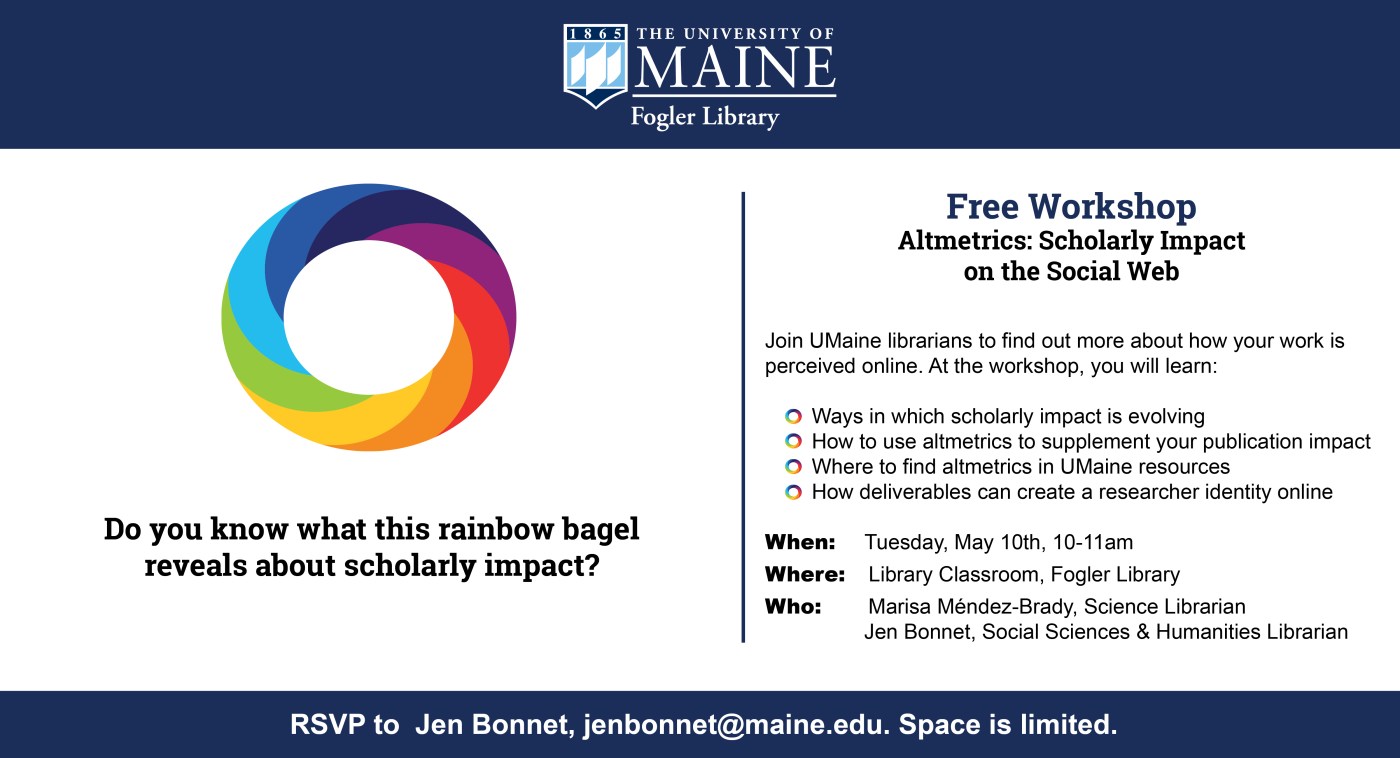
University of Maine Social Sciences and Humanities Librarian Jen Bonnet recently submitted designs that she and her colleagues at the Raymond H. Fogler Library created to introduce faculty and grad students to the idea of altmetrics, or non-traditional metrics usually measured by downloads, social media mentions, saves, and citations. Jen explains:

Continue reading “Altmetrics and Chill”

Coloring Our History

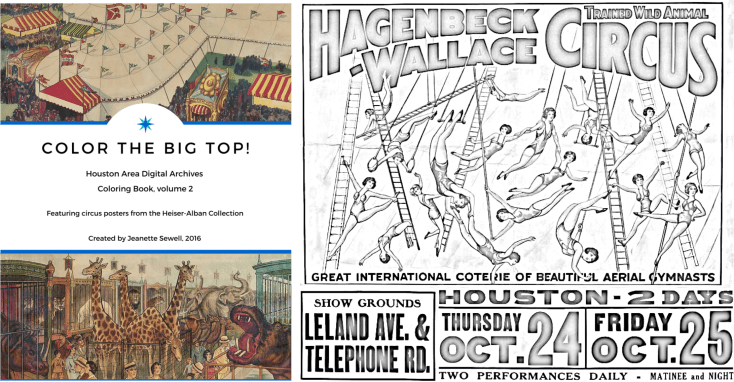
Houston, Texas is rich with culture, and the Houston Area Digital Archives division of the Houston Public Library works hard to capture the city’s history and make it accessible to all. In that spirit, HPL Cataloging and Metadata Services Librarian Jeanette Sewell recently submitted the digital archival coloring books designs she created.

Picture1
Jeanette describes her process in creating the covers and pages for the online books:

Continue reading “Coloring Our History”

It’s All in the Tone

All libraries have rules and policies; it’s how we maintain a sort of organized chaos at our dynamic, community-serving organizations. However, expressing those rules to library users can present a bit of a public relations challenge: We want to be friendly, yet firm; accommodating, but not so laissez-faire that we no longer have a purpose and mission. We often communicate our library’s policies through some sort of sign or poster, but are we thinking about the tone we are setting with the design of those posters? Our message might be saying one thing, but the way it’s visually displayed and organized may be communicating a very different meaning.

Continue reading “It’s All in the Tone”

Final Finals Post for the Semester

It seems like this year, more than ever, librarians have truly responded to students’ needs during finals with extended hours, programming, and tips and tricks to survive the stress.

Every spring semester at the MGH Institute of Health Professions, the library co-sponsors activities for students to take study breaks. Librarian Amanda Tarbet created the flyer below using Canva to remind students of library events during finals:

Continue reading “Final Finals Post for the Semester”

Library Reports as Infographics

For those of us in school and academic libraries, the end of the semester and school year is a time for reflection and…reporting (womp womp). Rather than send out the same old charts, graphs, and narrative reports, why not turn a chore into an exercise in graphic design? It’s a great opportunity to learn a new graphic design tool like Canva, Publisher, or Illustrator, and may even give you a chance to think about what numbers and data mean the most to you and your library.

Continue reading “Library Reports as Infographics”

Blog at WordPress.com.

Up ↑